
This article provides a critical overview of word and music studies, or musico-literary studies, in Wales. This field of study investigates the relationship between literature and music in its various forms. The scope of this article encompasses critical works published in the second half of the twentieth century in Welsh and aims to discuss the main ideas and works of significance or influence, whilst recognising that it is not possible to refer to each individual publication in a single overview. The field of study in Wales is placed in a critical context with an overview of the main points of interest in the wider discipline, and the article also identifies areas for further research in the field in Welsh.


Dr Elen Ifan, ‘Gwerddon: Astudiaethau cerddo-lenyddol yng Nghymru: y diffyg a’r galw' (2021)

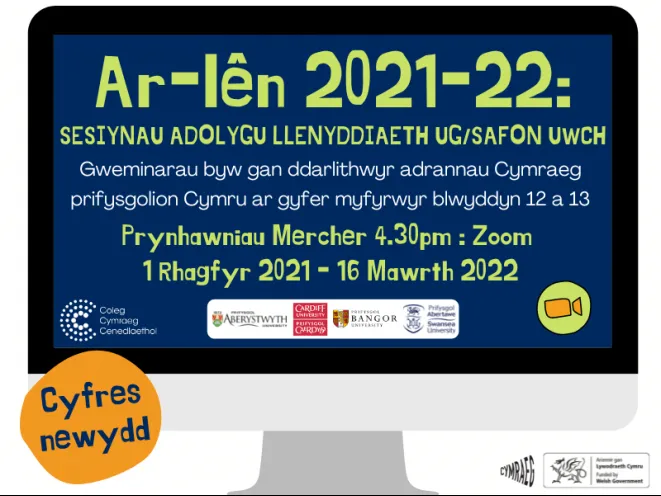
Ar-lên 2021-22: Revision Webinars for AS/A Level Welsh students (December 2021 - March 2022)
These live revision webinars are organized by the Coleg Cymraeg Cenedlaethol for year 12 and 13 students studying AS / A Level Welsh (First Language). The sessions will be hosted by lecturers from the Welsh departments of Bangor, Aberystwyth, Swansea and Cardiff universities, with the aim of enhancing your understanding of some of the literature topics you are studying in class. The sessions will be held in Welsh through Zoom between 4.30-5.15pm on Wednesday afternoons, with the first session on Wednesday 1 December 2021. 2021 1 December 2021: Dafydd ap Gwilym, Dr Dylan Foster Evans, Prifysgol Caerdydd (Bl.13) 8 December 2021: Gwerthfawrogi Rhyddiaith, Yr Athro Angharad Price, Prifysgol Bangor (Bl.13 + Bl.12) 2022 2 February 2022: Ymarfer Papur Gramadeg, Dr Alex Lovell, Prifysgol Abertawe (Bl.12) 9 February 2022: Hedd Wyn (Ffilm), Yr Athro Tudur Hallam, Prifysgol Abertawe (Bl.12) 16 February 2022: Branwen, Dr Aled Llion Jones, Prifysgol Bangor (Bl.13) 2 March 2022: Martha, Jac a Sianco (Caryl Lewis), Dr Bleddyn Owen Huws, Prifysgol Aberystwyth (Bl.13) 9 March 2022: Sul y Mamau yn Greenham (Menna Elfyn), Dr Rhiannon Marks, Prifysgol Caerdydd (Bl.12) 16 March 2022: Y Genhedlaeth Goll (Alan Llwyd), Yr Athro Mererid Hopwood, Prifysgol Aberystwyth The link for the event will be emailed to you on the day or the day before. Pupils, students, teachers and student teachers welcome. You'll be able to contribute or ask questions using the chat. Remember to follow the @CymraegCCC Twitter account and Instagram @instagymraeg account for more information and news about Welsh as a Subject. To register, click on the registration form link below:
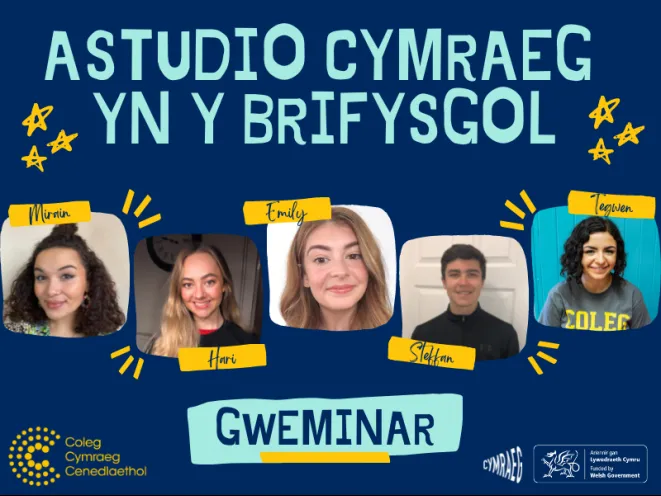
Studying Welsh at university (Webinar)
Webinar: Studying Welsh at university In year 12 or 13? Want to know more about studying Welsh as a subject at university? Find out more about what's on offer, and hear the opinions of our ambassadors studying the subject about their courses and their life as students of Welsh. Presentation recorded in November 2021. Includes: General information about studying Welsh at university, e.g. Where can you study Welsh? What can you study in terms of courses and modules? What financial help is available? (up to 19 minutes) Conversation between our ambassadors and current students about studying Welsh at university (19 minutes onwards) Welsh medium presentation.

150 New Resources
Press Release: More than 150 new resources have been published on the Porth Adnoddau, the Coleg Cymraeg's resources website, to support lecturers and practitioners in further education colleges and trainers working with apprenticeships. The resources will support educators to provide Welsh-medium and bilingual provision for all learners and apprentices whatever their Welsh language skills, in line with the aims of the Further Education and Apprenticeship Welsh-medium Action Plan launched by the Government in 2019. The Coleg Cymraeg has lead the national project to create and update over 150 Welsh language and bilingual digital resources across four priority subjects of Health and Care, Childcare, Public Services and Agriculture. The project was funded by a £150,000 grant from the Welsh Government. At present, the percentage of learning activities in the post-16 sector taking place through the medium of Welsh or bilingually is very low, but the Action Plan aims for a significant increase over the next few years. Ensuring that suitable resources are available to practitioners, lecturers and trainers is key to achieving the plan's objectives, especially given the relatively low percentage of the workforce who consider themselves Welsh speakers. According to the project manager, Dr Lowri Morgans, an Academic Manager at the Coleg Cymraeg, the project will have a far-reaching impact on the aims of Cymraeg 2050, the Government's national language strategy, to “develop post-compulsory education provision which increases rates of progression and supports everyone, whatever their command of the language, to develop Welsh language skills for use socially and in the workplace.” Dr Morgans said: "The aim of the project is to ensure that high-quality blended learning resources are available bilingually or through the medium of Welsh from Levels 1 to 3 across the priority areas. "Our subject co-ordinators, who are experienced specialists in their fields, have worked with e-learning specialists to ensure that the resources developed meet the needs of lecturers and practitioners in Wales and fill the gaps identified in terms of the lack of Welsh language and bilingual resources.” To support apprentices specifically, the Coleg has commissioned "Prentis-iaith at Understanding Level". The resource supports trainees who have some understanding of Welsh to further develop their skills, and follows on from the success of the original version, "Prentis-iaith at Awareness Level", which was previously commissioned to develop language awareness and has been downloaded from the Porth Adnoddau over 11,000 times. Fourteen resources have been created and updated in the field of Childcare, including Bilingual Childcare Vocabulary Posters. Joanne DeBurgh, a Childcare lecturer at Bridgend College, said: "We’ve printed all the posters on A3 paper and they’ve been put up in every classroom. Also, in the Childcare department, A5 copies have been inserted into the students' books to help with any tasks where they need the terms in Welsh. "Every resource has been useful. We need bilingual resources as we don't have many students who come from Welsh-medium schools or Welsh-speaking families.” Sixteen resources have been created and updated in Health and Care. Moli Harrington, a lecturer in Health and Care at Merthyr Tydfil College, said: "It's great to see that the Coleg Cymraeg not only commissioned new resources, but also took the time to collate and update presentations already created by sector staff. Sharing resources among different colleges facilitates bilingual teaching within Health and Care across Wales and gives us more time to focus on our learners. I look forward to seeing what resources will be placed on the Coleg Cymraeg's Porth Adnoddau next.” Sixty-two resources have been created and updated in Public Services, including 60 interactive learning units. Carolann Healy, a Public Services lecturer at Coleg Sir Gâr, said: "It's great to see bilingual versions of the BLC's Public Services resources, and they’ve been well-received by students and lecturers. Welsh is now being strengthened as a normal and natural language in our further education colleges to create a workforce that is bilingual. These resources are also a way of strengthening students' language skills in new areas and for those who may not have practised the language since their school days.” Sixty-three resources have been created and updated in Agriculture, including an updated farm animal health resource. David John, a lecturer in Agriculture at Bridgend College, said: "The resources are excellent and really help in the lesson especially when introducing a new subject. I really like that you can easily toggle between Welsh and English.” All the new resources can be found via the Porth Adnoddau.

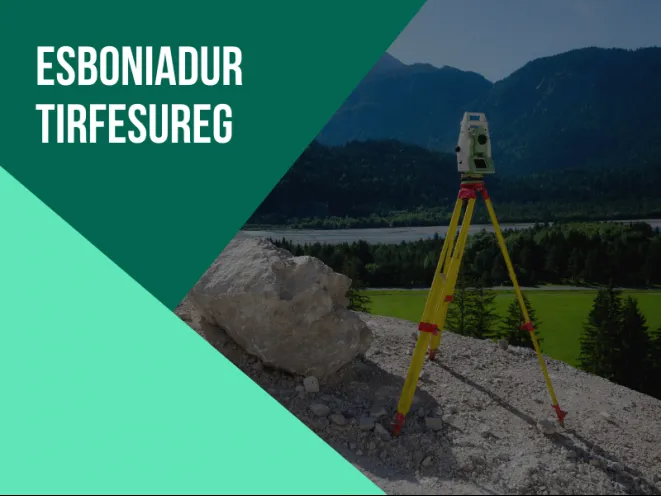
Esboniadur Tirfesureg (Surveying Explained)
An easy-to-use resource containing definitions and explanations of terms relating to the subject of surveying. The resource is for a variety of users, including university students, learners in further education colleges and professionals within the construction and surveying fields, and benefits the Welsh public sector in terms of terminology relevant to Local Development Plans and planning applications. The entries are divided into two main categories namely pure surveying and land and property surveying. The resource is the result of work by the University of South Wales School of Built Environment.
University Ready
University Ready is your easy-to-use hub, whether you’re about to move on to university-level education, or if you’re supporting someone who is – perhaps as a parent, teacher, carer or adviser. You can search by topic – like study skills, wellbeing and mental health, or student life – by institution, and by subject area, so you can be sure of getting straight to the resources you need.
Philip Jonathan, ‘Cynrychioliad amharamedrig ar gyfer cyd-newidynnau amlddimensiynol mewn model gwerthoedd eit...
A statistical methodology is presented to model extreme values from non-stationary environmental processes. The methodology is based on a generalized Pareto model for peaks over threshold of the environmental process combined with a Voronoi representation for the variation of extreme value model parameters with multi-dimensional covariates. Bayesian inference using reversible-jump MCMC, incorporating Metropolis-Hastings within Gibbs sampling, is used to estimate the joint posterior distribution of all parameters of the Voronoi representation. The methodology is applied to characterise extreme ocean storm severity with direction and season. The fitted model is validated by comparing the characteristics of data simulated under the model with those of the original sample data. Further, the model is used to estimate the distribution of maxima of peaks over threshold corresponding to return periods much longer than the period of the original data.
Learning Resources on the Social Care Wales website
Below is a link to the resources section on the Social Care Wales website. The resources are relevant to educators and learners in the field of Healthcare and Childcare. There is also a link to a document that has identified the resources that are relevant to the Level 2 and 3 Children's Care, Play, Learning and Development: Core courses.
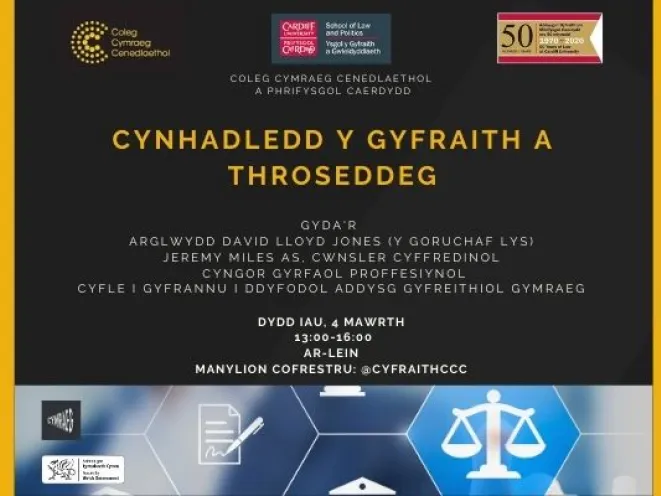
Cynhadledd y Gyfraith (Law Conference) 2021
An online conference for undergraduate and postgraduate students, or anyone with an interest in the field, held on 4 March 2021. The Conference discussed various aspects of Law in Wales today. Lord Lloyd-Jones, of the United Kingdom’s Supreme Court opened the event and a presentation with a question and answer session will be given by Jeremy Miles MP, Counsel General for Wales. In addition to this, there was a vocational panel by two professional lawyers and also a discussion where the views of students on teaching Law and Criminology through the medium of Welsh at our universities were sought. Click below to view recordings from the conference:
Introducing the Welsh language: Level 2 Children’s Care, Play, Learning and Development: Core
This resource is a collection of resources to support educators who wish to introduce more Welsh in the delivery of the Level 2 Children's Care, Play Learning and Development: Core course. The collection has been created to support educators in planning and setting classroom work activities or evidence based on learners' Welsh language skills. The collection includes: • a guide that explains how to use the resource. • 'Mapping the Opportunities to introduce the Welsh language' document for each core unit. • bilingual posters of the key terms for each unit. • a resource that provides ideas for learners to use the Welsh language on work placements.
Hwb - Essential Skills (Urdd)
The Hub offers bespoke qualifications and training in the key subjects, Communication, Numeracy and Digital Literacy. Individuals can work towards Entry 2 to Level 3 Essential Skills qualifications, or work to improve skills while undertaking another program of learning. The Hub is open for training providers for them to be able to refer learners who wish to undertake Essential Skills qualifications through the medium of Welsh. WHAT DOES THE LEARNING PROGRAMME INCLUDE? Initial Assessments Individual learning plan Access to virtual workshops 1: 1 Sessions Access to resources, session recordings and e-portfoli Individual tasks that’ll be assessed with feedback Controlled task and confirmatory tests (including practice tasks) Certificates
Introducing the Welsh Language: Level 3 Uniformed Protective Services
This resource is a collection of resources to support educators who wish to introduce more Welsh in the delivery of the Level 3 Uniformed Protective Services course. The collection has been created to support educators in planning and setting classroom work activities or evidence based on learners' Welsh language skills. The collection includes: • a guide that explains how to use the resource. • 'Mapping the Opportunities to introduce the Welsh language' document for each core unit. • bilingual posters of the key terms for each unit.